
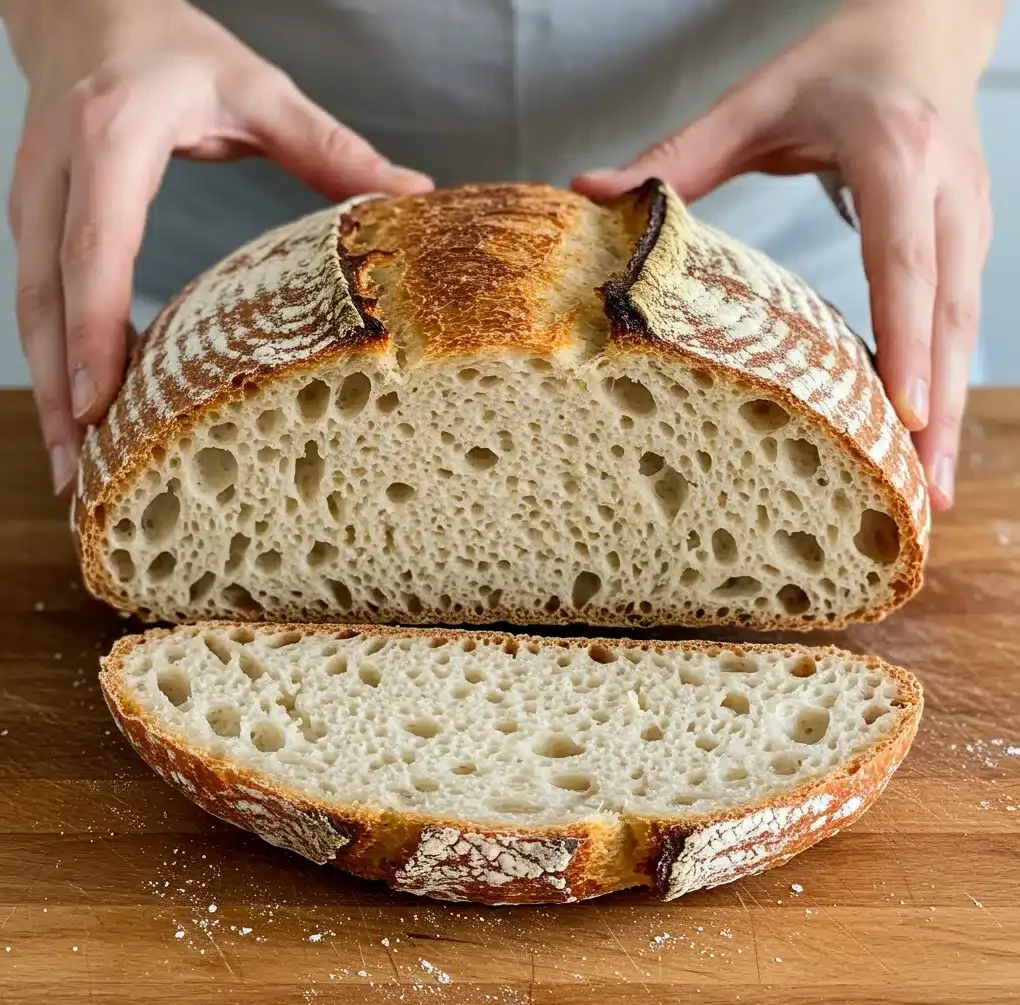
Sourdough bread is a timeless, naturally leavened loaf made without commercial yeast. Instead, it uses a “starter”—a mixture of flour and water that captures wild yeast and bacteria from the environment. This slow fermentation not only gives sourdough its signature tang but also results in a bread that’s easier to digest and full of flavor. Whether you’re new to baking or a seasoned kitchen enthusiast, sourdough offers a delicious journey into the art of traditional bread making.
Why You’ll Love This Recipe
You’ll love sourdough bread for its chewy crumb, crispy crust, and tangy flavor that store-bought loaves just can’t match. Making sourdough at home is deeply satisfying—it’s part science experiment, part meditation. Plus, it’s healthier than many commercial breads, thanks to its natural fermentation process. It’s perfect for sandwiches, toast, dipping into soups, or just slathered with butter.
Ingredients
(Tip: You’ll find the full list of ingredients and measurements in the recipe card below.)
-
For the starter:
-
Whole wheat or all-purpose flour
-
Filtered water
-
-
For the bread dough:
-
Bread flour or all-purpose flour
-
Sourdough starter (active and bubbly)
-
Salt
-
Warm water
-
Optional Add-ins:
-
Seeds (sesame, flax, sunflower)
-
Herbs (rosemary, thyme)
-
Dried fruits (raisins, cranberries)
-
Cheese (shredded cheddar, parmesan)
Directions
1. Prepare the starter (Day 1–7):
Mix equal parts flour and filtered water in a clean jar. Cover loosely and leave at room temperature. Feed the starter daily with fresh flour and water until it bubbles and doubles in size. This takes about 5–7 days.
2. Mix the dough:
In a large bowl, combine your active starter, water, and flour. Mix until no dry bits remain. Cover and let rest (autolyse) for 30 minutes.
3. Add salt and begin bulk fermentation:
Sprinkle in salt and knead or stretch and fold the dough. Let the dough rest in a warm spot, performing stretch-and-folds every 30 minutes for 3–4 hours.
4. Shape and proof:
Turn the dough onto a floured surface, shape it into a ball or batard, and place it in a proofing basket or bowl. Let it rise at room temperature for 1–2 hours, then refrigerate overnight for a cold proof.
5. Bake the bread:
Preheat your oven and Dutch oven to 475°F (245°C). Carefully place the dough into the hot pot, score the top, and bake covered for 20 minutes. Remove the lid and bake for another 20–25 minutes until golden brown.
6. Cool and enjoy:
Let the bread cool completely before slicing to allow the crumb to set.
Servings and Timing
Makes 1 large loaf. Prep time includes 7 days for starter and about 24 hours for the baking process.
Variations
-
Add chopped olives, garlic, or herbs for a Mediterranean twist.
-
Mix in raisins and cinnamon for a sweet breakfast loaf.
-
Use part rye or whole wheat flour for deeper flavor and nutrition.
-
Top with seeds before baking for a crunchy crust.
-
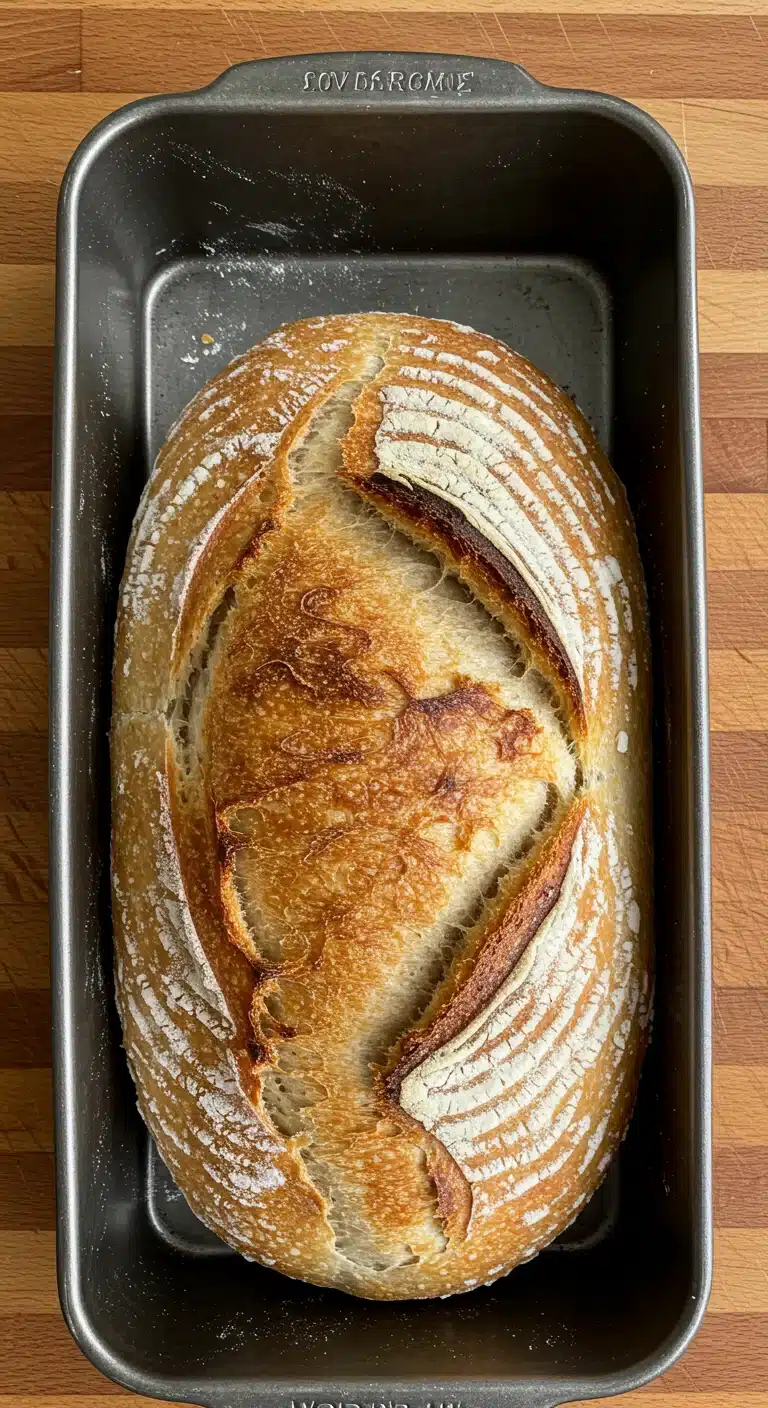
Try baking in a loaf pan for sandwich-style slices.
Storage/Reheating
Store sourdough at room temperature in a paper bag or bread box for up to 3 days. For longer storage, wrap it tightly and freeze. Reheat in a toaster or oven for that fresh-baked taste.
FAQs
Can I make sourdough without a Dutch oven?
Yes, you can bake it on a baking stone or sheet, but steam is crucial. Add a pan of water to the oven or mist the dough during the first few minutes.
Why is my sourdough dense?
Dense bread often means the starter wasn’t active enough or the dough was underproofed. Make sure your starter is bubbly and passes the “float test.”
How often do I need to feed the starter?
Daily if kept at room temperature; once a week if stored in the fridge. Always feed before baking to ensure it’s active.
What flour is best for beginners?
Bread flour gives better structure, but all-purpose works too. Mix with whole wheat for flavor and fermentation boost.
Can I skip the overnight proof?
It’s optional but highly recommended. The cold proof enhances flavor and makes shaping easier.
Conclusion
Sourdough bread is more than just a recipe—it’s a slow, beautiful process that rewards you with a loaf full of character, flavor, and nourishment. With just flour, water, salt, and a bit of patience, you can transform your kitchen into a small artisan bakery. Whether you eat it plain, toast it, or turn it into gourmet sandwiches, sourdough bread is a delicious way to connect with the tradition of real food.
Print
Homemade Sourdough bread
- Total Time: 16 hours 45 minutes
- Yield: 1 large loaf
- Diet: Vegan
Description
Learn how to make perfect homemade sourdough bread with this easy, step-by-step guide. Crispy crust, tangy flavor, and gut-friendly goodness in every slice!
Ingredients
For the Starter:
- 1/2 cup whole wheat or all-purpose flour
- 1/2 cup filtered water
- For the Bread Dough:
- 3 1/2 cups (440g) bread flour or all-purpose flour
- 1/4 cup (60g) active sourdough starter
- 1 1/2 tsp sea salt
- 1 1/3 cups (320ml) warm water
- Optional Add-ins:
- 1 tbsp olive oil
- 1/4 cup seeds (sunflower, sesame, flax)
- Fresh herbs, garlic, cheese, or dried fruit
Instructions
-
Make the starter (Days 1–7):
Mix equal parts flour and filtered water. Feed daily with the same ratio. After 5–7 days, it should be bubbly and pass the float test. -
Mix the dough (Day 8):
Combine active starter, warm water, and flour in a bowl. Mix until combined. Rest 30 minutes (autolyse). -
Add salt & bulk ferment:
Add salt. Stretch and fold the dough every 30 minutes for 3–4 hours. Cover and let rest in a warm spot. -
Shape and proof:
Shape dough into a ball. Place in a floured proofing basket. Let rise for 1–2 hours, then refrigerate overnight. -
Bake:
Preheat oven to 475°F (245°C) with a Dutch oven inside. Transfer dough, score, and bake covered for 20 minutes, then uncovered for 20–25 minutes more. -
Cool and slice:
Let cool completely before slicing for best texture.
Notes
- Always use an active, bubbly starter.
- Don’t rush the fermentation—it’s key to flavor and texture.
- If your dough is sticky, wet your hands before handling.
- Scoring helps control how your loaf expands in the oven.
- For extra crunch, spritz the dough with water before baking.
- Prep Time: 16 hours
- Cook Time: 45 minutes