
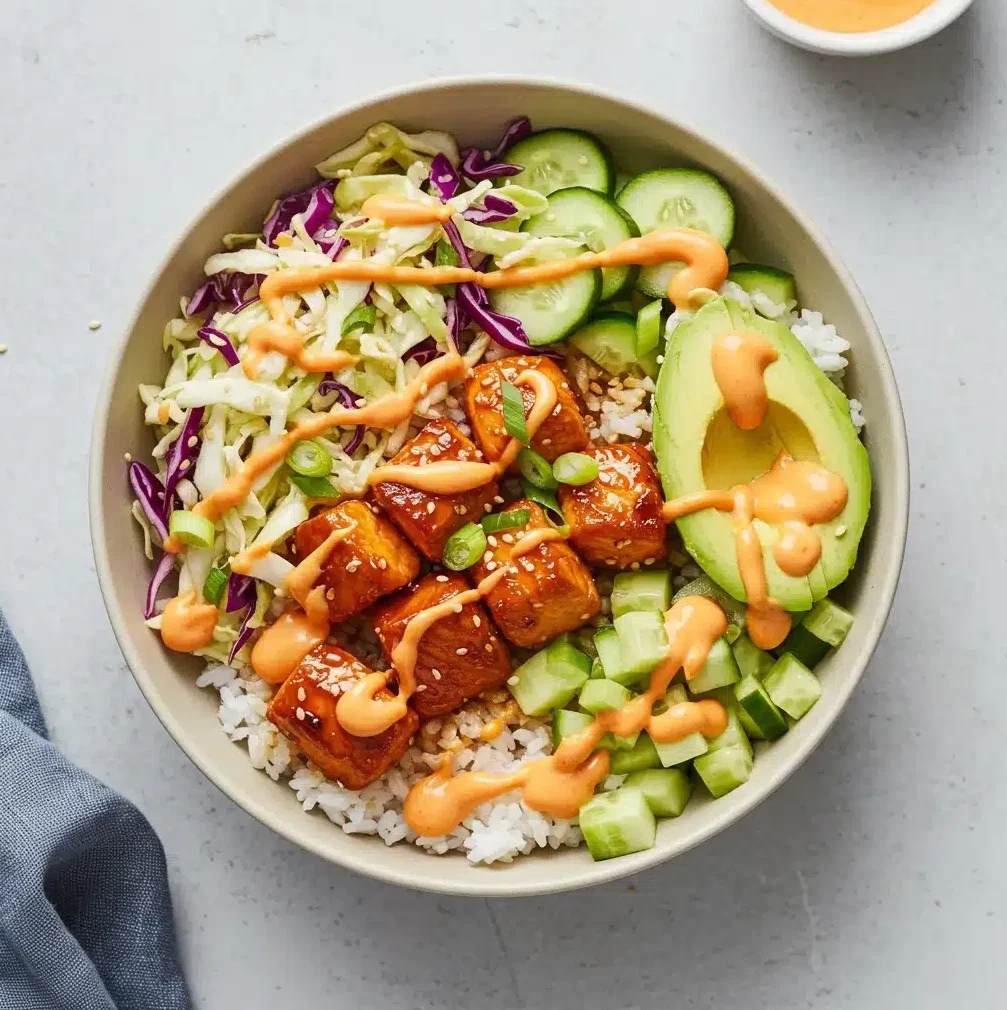
This salmon rice bowl is a fresh, balanced, and nutrient-rich meal that’s both satisfying and easy to make. Featuring tender oven-baked or pan-seared salmon, perfectly steamed rice, crunchy vegetables, and your choice of sauces like spicy mayo or soy-ginger glaze, this bowl hits every flavor note. It’s ideal for lunch, dinner, or meal prep—naturally gluten-free, high in protein, and endlessly customizable with toppings like avocado, cucumber, pickled onions, or sesame seeds. Ready in 30 minutes, this vibrant bowl brings bold flavor and feel-good nutrition to your table.
Tools You’ll Need
To make prepping this Healthy Salmon Rice Bowl even easier, I love using my Cutluxe Butcher Knife for clean, effortless cuts of salmon and veggies. A good Slotted Kitchen Spatula makes flipping salmon fillets simple without breaking them apart. And for serving, these White Ceramic Bowls are the perfect size — sturdy, stylish, and just right for building a hearty rice bowl at home.
Choosing the Right Ingredients
The quality of your bowl depends on the freshness and balance of your ingredients. But don’t worry—you don’t need fancy stuff to make it shine.
Salmon: Fresh, Frozen, or Canned?
Your best bet is fresh, skin-on salmon fillets. But if you’re short on time or on a budget, frozen salmon is a fantastic backup—as long as you thaw it properly in the fridge overnight. Even canned salmon can work in a pinch (just make sure it’s skinless and boneless for the best texture).
If you’re going for crispy-edged, tender-in-the-middle salmon, pan-searing or baking is the way to go. For a flakier texture, steaming or air frying is excellent too.
Choose wild-caught if you can—it’s usually leaner, richer in nutrients, and more flavorful.
Rice: The Base That Binds It All
The rice you choose sets the tone for the whole bowl. You can go:
-
White jasmine or basmati – Light, fluffy, and neutral.
-
Brown rice – Heartier and higher in fiber.
-
Sushi rice – Sticky, slightly sweet, and perfect for soy-based sauces.
-
Cauliflower rice – If you’re keeping it low-carb or keto.
-
Quinoa – For extra protein and a nutty bite.
Make sure your rice is warm and well-seasoned. A splash of rice vinegar or a bit of sesame oil can instantly elevate it.
How to Cook the Salmon Just Right
Perfectly cooked salmon is the heart of this dish, and thankfully, it’s much easier than most people think. You don’t need any fancy gear or chef skills—just a little know-how and the right technique.
Oven-Roasted Salmon
This method is great if you’re cooking multiple portions at once or want a hands-off approach.
-
Preheat the oven to 400°F (200°C).
-
Pat the salmon dry and place it on a parchment-lined baking sheet.
-
Season simply with salt, pepper, garlic powder, and a touch of olive oil or soy sauce.
-
Bake for 12–15 minutes, depending on thickness, until the fish flakes easily with a fork and is just opaque in the center.
This method yields moist, fork-tender salmon with minimal effort. You can add a honey-soy glaze in the last 5 minutes for a touch of sweetness.
Pan-Seared Salmon
Want crispy skin and a caramelized crust? Pan-searing is the way to go.
-
Heat a skillet over medium-high heat with 1 tablespoon oil.
-
Place the salmon skin-side down, pressing gently so it doesn’t curl up.
-
Sear for 3–4 minutes, then flip and cook another 2–3 minutes on the other side.
-
Let it rest for a couple of minutes before slicing or flaking.
This method gives you that restaurant-quality exterior with a juicy interior. Just be sure not to overcook—the difference between perfect and dry salmon is about 60 seconds.
Air Fryer Salmon
This one’s for the busy folks. It’s fast, clean, and delivers shockingly good results.
-
Preheat the air fryer to 400°F (204°C).
-
Lightly oil the fillets and season as desired.
-
Air fry for 10–12 minutes, depending on size, no flipping needed.
You’ll get crisp edges and a soft center—ideal for shredding into a bowl.
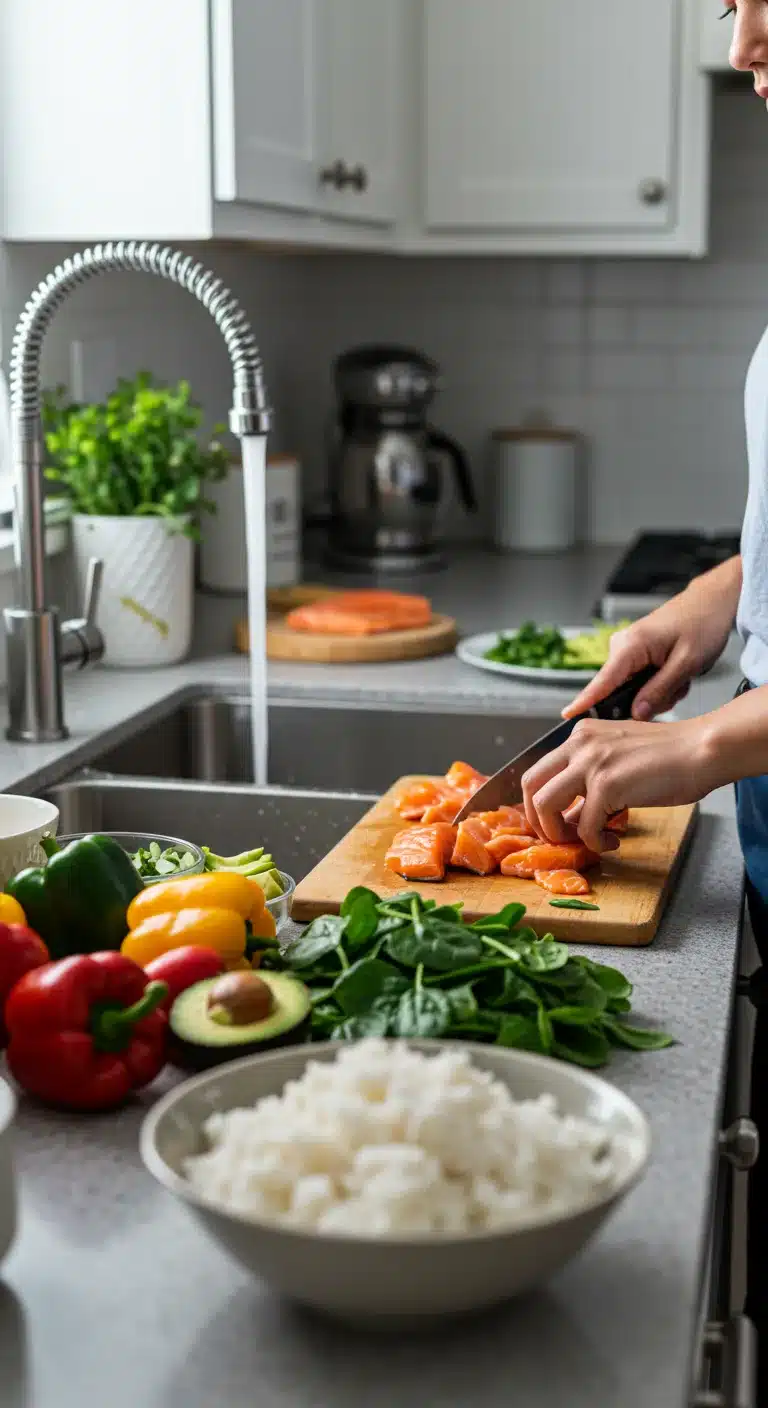
Step-by-Step Assembly
Now for the fun part—building your bowl. Think of this like constructing a delicious masterpiece. Each layer adds texture, color, and flavor.
1. Start with the Base
Scoop a generous portion of warm rice into your bowl. If you’re using sushi rice or seasoned brown rice, fluff it with a fork to keep it light.
Optional: Drizzle a teaspoon of sesame oil or rice vinegar over the rice for added flavor.
2. Add the Salmon
Place your cooked salmon on top. You can slice it neatly or flake it into bite-sized pieces. If using leftover salmon, warm it up gently or serve cold for a refreshing twist.
3. Pile On the Toppings
Add a colorful combo of your favorite veggies and garnishes:
-
Avocado for creaminess
-
Cucumber or carrot for crunch
-
Pickled onions or kimchi for tang
-
Green onions and sesame seeds for freshness and bite
The contrast is what makes each bite different from the last.
4. Sauce It Up
Drizzle with spicy mayo, soy-ginger glaze, or any dressing you love. Use a spoon or squeeze bottle for those signature zigzag lines. This isn’t just for looks—it spreads flavor evenly.
5. Finish with Texture
Crispy nori strips, toasted sesame seeds, crushed wasabi peas—something that adds a little crunch and visual flair.
Creative Variations
Salmon rice bowls are incredibly adaptable—so whether you want to switch up the flavor profile or cater to dietary preferences, the options are endless. Here are some of the most exciting and tasty variations you can try to keep your bowl game strong.
1. Spicy Korean-Style Salmon Bowl
This version brings bold, fermented, and spicy flavors to your bowl.
What to add:
-
Gochujang (Korean chili paste) mixed with sesame oil and a splash of rice vinegar as your sauce
-
Kimchi, pickled daikon, and shredded lettuce as toppings
-
A soft-boiled or fried egg to add creaminess
Pro Tip: Add sesame-roasted seaweed (gim) and a sprinkle of Korean chili flakes (gochugaru) for authenticity.
2. Mediterranean Lemon-Herb Salmon Bowl
A lighter, zestier twist on the classic that feels super fresh.
What to add:
-
Swap the rice for quinoa or couscous
-
Use lemon-herb roasted salmon with garlic, rosemary, and thyme
-
Toppings: cherry tomatoes, kalamata olives, diced cucumber, feta cheese, parsley
-
Drizzle with tzatziki or lemon-tahini dressing
Pro Tip: Toast some pine nuts or sunflower seeds for extra crunch.
3. Vegan “Salmon” Bowl with Tofu or Jackfruit
Plant-based eaters, rejoice. You can still enjoy a rich and hearty bowl using flavorful, satisfying alternatives.
What to add:
-
Marinated tofu or jackfruit “salmon” (use liquid smoke, soy sauce, paprika, garlic powder)
-
Brown rice or cauliflower rice
-
Toppings: avocado, roasted chickpeas, red cabbage, shredded carrots
-
Vegan spicy mayo or peanut-ginger sauce
Pro Tip: Freeze and thaw your tofu once before cooking—it gives it a meatier texture that soaks up marinades beautifully.
4. Teriyaki Salmon Bowl with Pineapple
This sweet and savory bowl brings a tropical twist to the table.
What to add:
-
Teriyaki-glazed salmon
-
Steamed white rice or coconut jasmine rice
-
Toppings: grilled pineapple, cucumber ribbons, green onion, sesame seeds
-
Sauce: extra teriyaki or soy-lime dressing
Pro Tip: Grill your pineapple for caramelized flavor and extra wow-factor.
Frequently Asked Questions
Can I make this with leftover salmon?
Absolutely! In fact, this recipe is a fantastic way to repurpose leftover grilled, baked, or even poached salmon. Just flake it into large chunks and reheat gently, or serve it cold for a more refreshing take. Cold salmon with fresh cucumbers, avocado, and a drizzle of spicy mayo is an unbeatable combo.
What’s the best way to reheat a salmon rice bowl?
For best results, store the salmon, rice, and toppings separately. When ready to eat, microwave the rice and salmon for about 1–2 minutes until warm (or reheat salmon in a skillet or air fryer for a crispy finish). Then add your fresh toppings and sauce. Avoid microwaving the full bowl with raw veggies—they’ll lose their texture and flavor.
Can I use cauliflower rice or quinoa instead of white rice?
Yes! Cauliflower rice is great for a low-carb option and works well with bold sauces. Quinoa offers extra protein and a nutty texture. Both alternatives add a unique twist and keep the dish nutritious and filling.
Print
Healthy Salmon Rice Bowl
- Total Time: 30 minutes
- Yield: 2 servings
- Diet: Gluten Free
Description
Make this flavorful salmon rice bowl in just 30 minutes! Packed with juicy salmon, fluffy rice, fresh veggies, and bold sauces—perfect for healthy dinners or weekly meal prep.
Ingredients
For the Salmon Bowl:
- 2 salmon fillets (6 oz each), fresh or thawed
- 2 cups cooked jasmine or brown rice
- ½ cucumber, thinly sliced
- 1 carrot, shredded
- 1 avocado, sliced
- 2 green onions, chopped
- 1 tbsp sesame seeds
- 1 sheet seaweed (nori), cut into strips
- Fresh cilantro, for garnish (optional)
- Salt, pepper, garlic powder, olive oil (for seasoning)
Spicy Mayo (Optional):
- 2 tbsp mayonnaise
- 1 tbsp sriracha
- ½ tsp rice vinegar or lime juice
Soy-Ginger Glaze (Alternative):
- 2 tbsp low-sodium soy sauce
- 1 tsp sesame oil
- 1 tsp grated fresh ginger
- 1 tsp honey or maple syrup
Instructions
- Cook the Rice:
Prepare your rice according to package instructions. Fluff with a fork and keep warm. - Cook the Salmon:
Pat fillets dry. Season with salt, pepper, garlic powder, and a drizzle of olive oil. - Oven Method: Bake at 400°F (200°C) for 12–15 minutes.
- Pan-Seared: Sear 3–4 minutes per side in a hot skillet with oil.
- Air Fryer: Cook at 400°F for 10–12 minutes.
- Prepare the Sauce:
Combine all ingredients for either spicy mayo or soy-ginger glaze. Mix well until smooth. - Assemble the Bowl:
Divide rice into two bowls. Top with salmon (whole or flaked), cucumber, carrots, avocado, and green onion. Garnish with sesame seeds, nori strips, and cilantro. - Add the Sauce:
Drizzle generously with your preferred sauce and serve immediately.
Notes
- Use fresh salmon for the best texture and flavor.
- If meal prepping, store rice, salmon, and toppings separately to preserve freshness.
- Add a squeeze of lime or a sprinkle of furikake for an extra layer of flavor.
- To keep it low-carb, swap rice for cauliflower rice or shredded cabbage.
- Store leftovers in airtight containers and assemble fresh when ready to eat.
- Prep Time: 15 minutes
- Cook Time: 15 minutes